When I look at the security posture of any Microsoft 365 environment, the one area that tells me immediately how mature the environment is: Conditional Access.
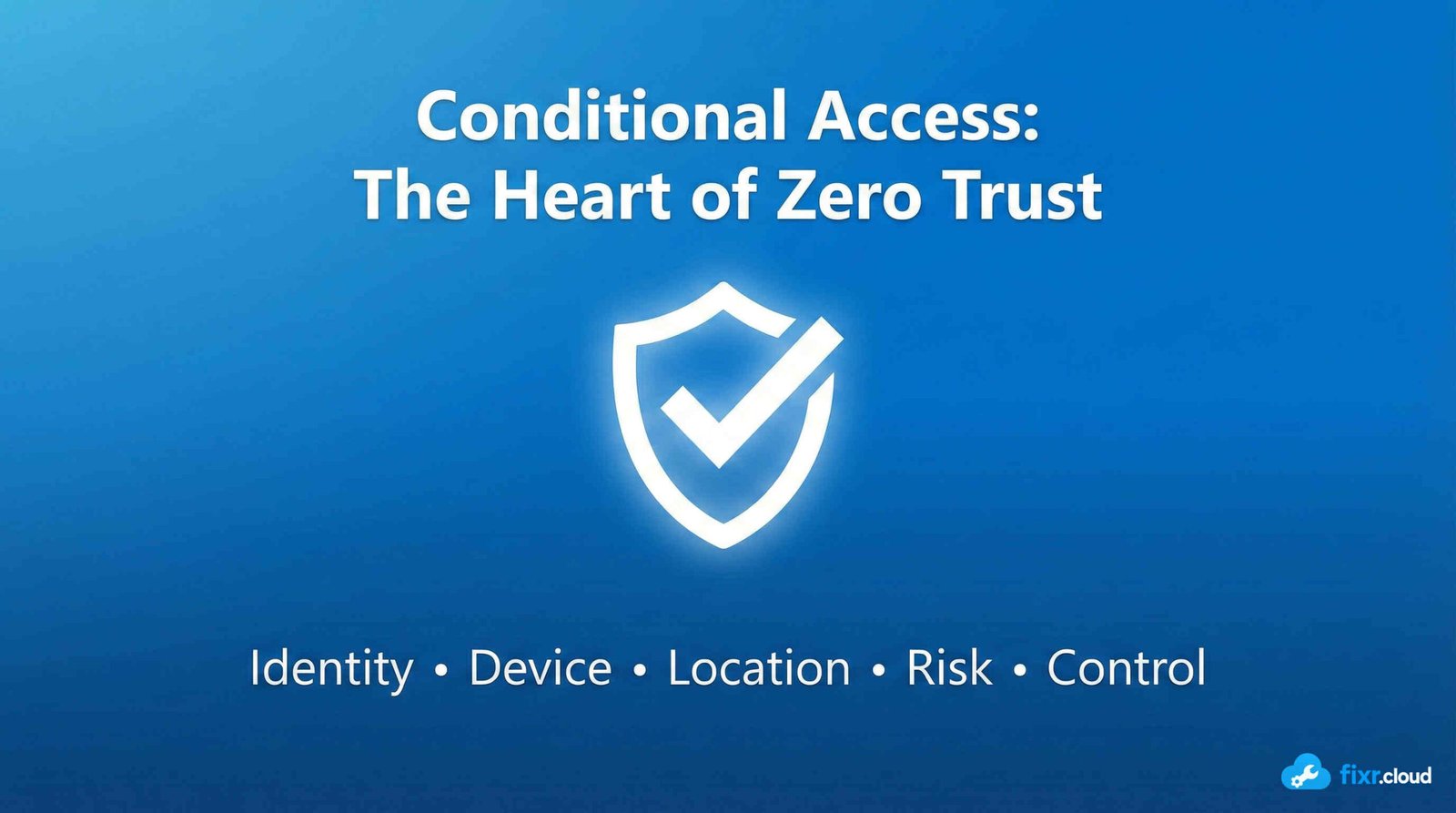
Conditional Access is the decision engine behind Zero Trust.
It evaluates every login attempt and applies rules that enforce identity, device, location, and risk-based access.
If you want a strong, modern Microsoft 365 security model, Conditional Access is not optional — it’s foundational.
Let me explain why.
What Conditional Access Actually Does
Conditional Access evaluates conditions such as:
- Who is signing in
- From what device
- From what location
- From what app
- Whether the device is healthy
- Whether the sign-in looks risky
- Whether the user is performing a sensitive action
Based on this evaluation, it allows, blocks, or restricts access.
Think of it as the “security brain” of Microsoft 365.
Why Conditional Access Matters
1. It Enforces Zero Trust
Zero Trust requires verification at every step.
Conditional Access validates:
- Identity
- Device
- Application
- Sign-in risk
- Location
- Compliance state
It’s one of the few tools that gives you total control over these signals.
2. MASSIVELY reduces the risk of compromised accounts
Even if a password is stolen, attackers are blocked because:
- MFA is required
- Risky sign-ins are blocked
- Unfamiliar locations require extra checks
- Unmanaged devices are denied
- Legacy authentication is disabled
This closes most common attack paths.
3. Controls Access From Unmanaged Devices
A major risk in modern environments is access from personal devices.
Conditional Access lets you:
- Allow browser-only access
- Block downloads
- Require app protection
- Restrict sensitive apps
This protects data from leaving the organization.
4. Blocks Legacy Authentication
Legacy protocols = no MFA
No MFA = easy compromise
Blocking legacy auth is one of the highest-impact decisions you can make.
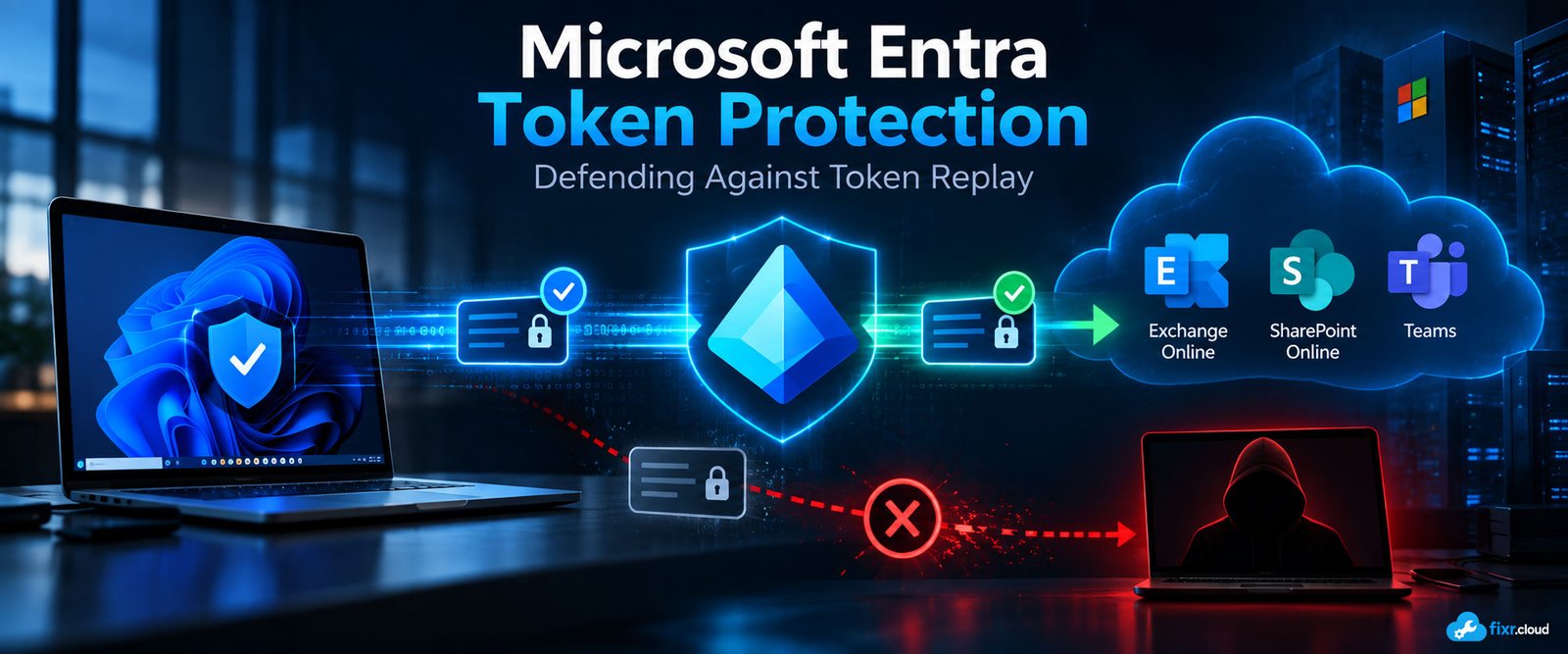
5. Integrates With Entra ID Sign-In Risk
Conditional Access can use risk signals such as:
- Impossible travel
- Atypical behavior
- Known breach credentials
- Malware-linked IPs
Risk-based policies add huge value to overall security.
6. Simplifies Complex Security Requirements
Instead of configuring multiple tools, Conditional Access centralizes:
- MFA
- Device trust
- Location restrictions
- App restrictions
- Compliance requirements
This makes policy management easier and cleaner.
How I Deploy Conditional Access in Real Environments
1. Start With Core Security Policies
These are the baseline and should exist in every tenant:
- Require MFA for all users
- Block legacy authentication
- Require compliant devices for full access
- Require MFA for admin roles
- Block access from risky sign-ins
- Block access from non-approved countries
2. Protect High-Privilege Accounts
Admins should have:
- Separate admin accounts
- Strict MFA
- Access only from trusted devices
- No access from external networks
- Strict session controls
Admins are your highest-value targets.
3. Use App-Based Conditional Access
Useful for allowing BYOD:
- Browser-only access
- App protection policies
- Restrict copying/downloading
- Restrict printing
This protects data without blocking productivity.
4. Implement Location-Based Rules
Examples:
- Allow corporate services only from approved countries
- Block high-risk geographies
- Require MFA when accessing from new locations
5. Use Report-Only Mode When Testing
Before enforcing a new policy, I always test with:
Report-Only Mode
This prevents accidental lockouts.
6. Monitor Sign-In Logs Regularly
I review:
- Failed logins
- Risky IPs
- Impossible travel events
- Legacy auth attempts
- Non-compliant device attempts
This strengthens the overall security posture.
Final Thoughts
Conditional Access is one of the most powerful tools in Microsoft 365 — and one of the most important to configure correctly.
It transforms security from a static model into a dynamic, intelligent, real-time decision process.
If I could pick only one security control to strengthen an M365 environment, Conditional Access would be the first.
This is the kind of practical M365 guidance I share at Fixr.Cloud — Smarter IT, Simplified.