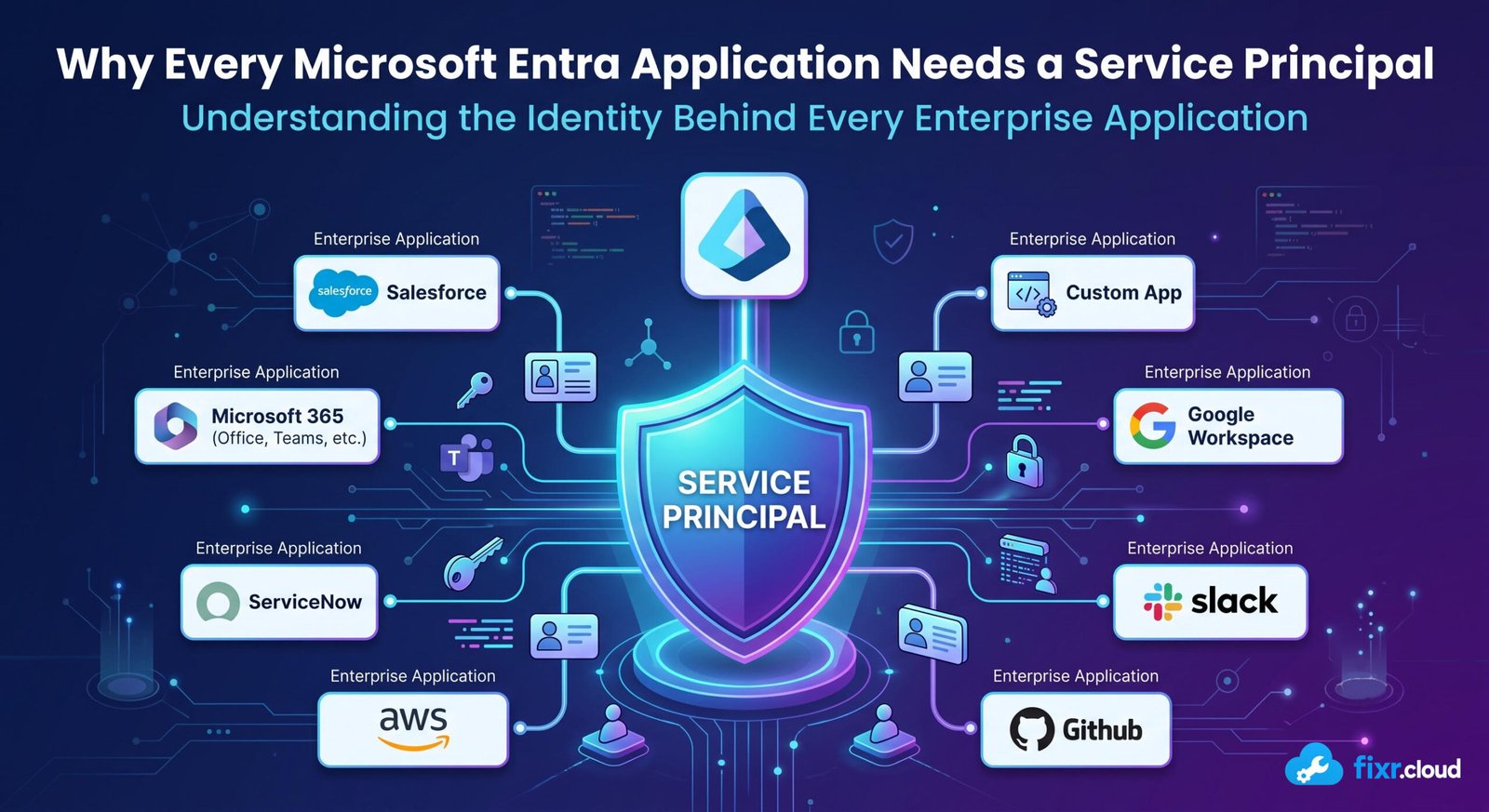
Why Every Microsoft Entra Application Needs a Service Principal
If you’ve ever opened Enterprise Applications in Microsoft Entra, you’ve seen hundreds of applications listed—many of which you never created.
So where did they come from?
The answer is Service Principals.
Understanding Service Principals is one of the biggest “aha!” moments in Microsoft Entra administration. Once you understand them, concepts like Single Sign-On, Microsoft Graph permissions, and Enterprise Applications become much easier to manage.
Why Does It Matter?
Every application that interacts with your Microsoft Entra tenant needs an identity inside your organization.
That’s exactly what a Service Principal provides.
Without it, Microsoft Entra wouldn’t know:
- Which users can access the application.
- Which permissions have been granted.
- Which Conditional Access policies apply.
- How to log sign-in activity.
In short, the Service Principal is the application’s identity inside your tenant.
What Is a Service Principal?
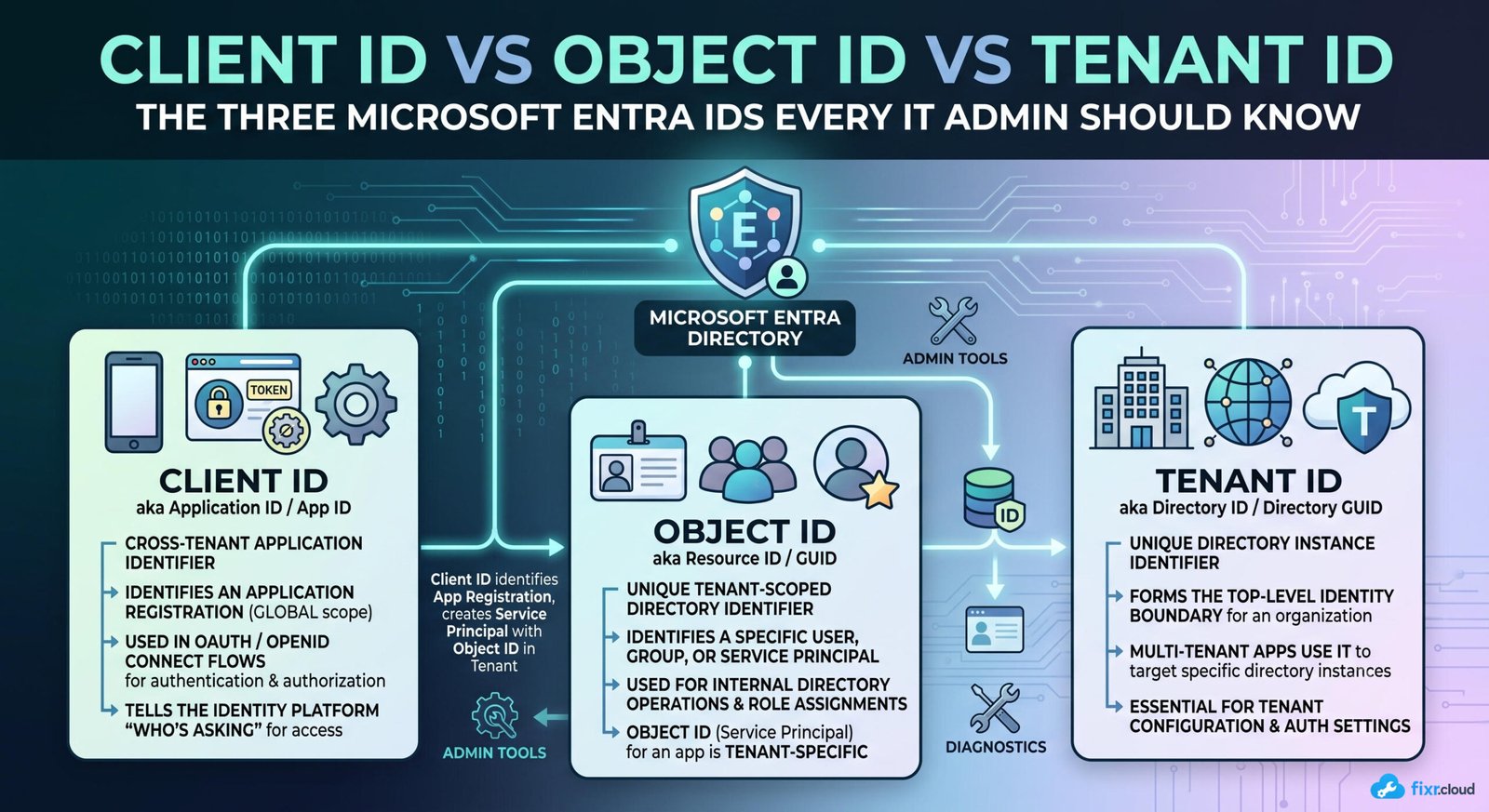
A Service Principal is a tenant-specific identity created for an application.
Think of it as the application’s employee badge.
The application itself may exist globally, but every organization gets its own Service Principal to manage that application’s access independently.
For example, if both Contoso and Fabrikam use the same third-party application, each tenant has its own Service Principal with its own users, permissions, and security settings.
How Is a Service Principal Created?
A Service Principal is created automatically when:
- You register a custom application.
- You grant consent to a third-party application.
- You add an application from the Microsoft Entra Gallery.
You don’t usually create one manually—Microsoft Entra does it for you behind the scenes.
Real-World Example
Imagine your organization starts using Zoom with Microsoft Entra Single Sign-On.
You won’t find Zoom under App Registrations because Zoom’s developers own the application.
However, once your administrator grants consent, Microsoft Entra creates a Service Principal in your tenant.
From that point on, you can:
- Assign users.
- Configure Single Sign-On.
- Apply Conditional Access.
- Monitor sign-ins.
- Disable or remove access.
Everything is managed through the Service Principal.
Common Mistakes
- Assuming a Service Principal and an App Registration are the same object.
- Deleting a Service Principal without understanding its impact on user access.
- Looking for third-party applications under App Registrations instead of Enterprise Applications.
Best Practices
- Review Enterprise Applications regularly and remove unused applications.
- Limit admin consent to trusted applications.
- Monitor sign-in logs for unexpected activity.
- Apply Conditional Access policies to critical enterprise applications.
💡 Fixr.Cloud Insight
When troubleshooting application access, I rarely start with the application itself.
I first check the Service Principal.
More often than not, the issue isn’t the application—it’s a user assignment, Conditional Access policy, or missing permission configured on the Service Principal.
Knowing where to investigate first can save a lot of troubleshooting time.
🎯 Bottom Line
If App Registrations define what an application is, Service Principals define how that application works inside your organization.
Understanding that relationship is the foundation of Microsoft Entra application management.