There are many powerful capabilities in Azure, but some of the most valuable ones are surprisingly simple.
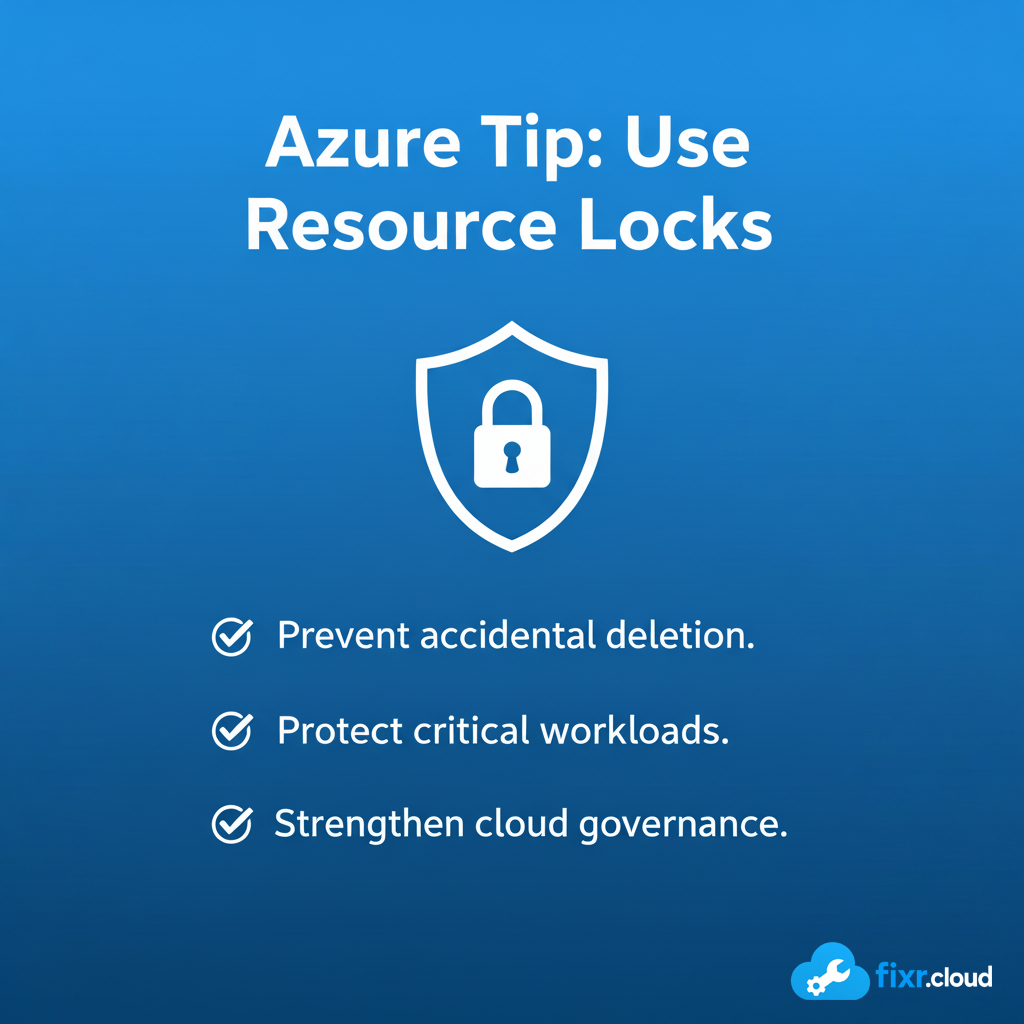
One of those features is Azure Resource Locks.
In my experience managing Azure environments, I’ve seen how a single accidental delete can cause outages, break applications, or trigger unexpected incidents. It usually happens when someone removes a resource group or modifies something without realizing the underlying dependency.
This is exactly why I rely on Resource Locks as a standard part of every Azure governance model.
What Are Azure Resource Locks?
Azure Resource Locks are built-in safeguards that prevent accidental modifications or deletions.
There are two types:
1. CanNotDelete (Delete Lock)
The resource can be read and modified, but not deleted.
2. ReadOnly (Read-Only Lock)
The resource cannot be modified or deleted — only read.
These locks can be applied at:
- Subscription level
- Resource group level
- Individual resource level
The inheritance model ensures consistency:
If you lock a resource group, everything inside inherits the same protection unless explicitly changed.
Why Resource Locks Matter in Real-World Scenarios
1. Preventing Accidental Deletions
This is the biggest benefit.
Even experienced teams make mistakes, especially when working on complex environments or performing bulk changes.
A delete lock ensures:
- Resource groups cannot be deleted accidentally
- Networking components remain intact
- Security configurations don’t disappear midway
- Core workloads remain safe from human error
2. Protecting Production Workloads
I always ensure the following production resources have locks:
- Virtual networks (VNets)
- Route tables
- Network security groups (NSGs)
- Key Vaults
- Storage accounts hosting critical data
- App Service Plans
- SQL servers and databases
- Central shared resources
Losing any of these can create a chain reaction of issues.
3. Enforcing Governance and Operational Discipline
Locks help ensure that:
- Changes are intentional
- Only authorized teams modify critical resources
- Infrastructure remains stable
- Operational risk stays low
Even in organizations with strict RBAC, locks add an extra layer of protection.
4. Safeguarding Shared Infrastructure
Shared components like:
- Hub VNet
- Peering connections
- Firewalls
- DNS zones
- Load balancers
…should always be protected.
If someone modifies these accidentally, it can impact multiple workloads.
How I Use Locks in My Azure Governance Approach
Step 1: Identify Critical Resources
Before applying locks, I review:
- Production workloads
- Shared network components
- Security layers
- Storage used for logs and backups
Step 2: Choose the Right Lock Type
For most production environments:
- Delete Lock → Default choice
- Read-Only Lock → For highly sensitive or shared resources (Key Vaults, core VNets, policies)
Step 3: Apply Locks Consistently
I apply locks at:
- Subscription level (for shared infra only)
- Resource group levels for production
- Individual resources for sensitive components
Step 4: Communicate With Teams
Locks must be known by:
- DevOps
- Infrastructure teams
- Developers
- Security teams
So nobody is surprised by blocked modifications.
Limitations to Keep in Mind
Locks are powerful, but they come with considerations:
- Automation pipelines might fail if they try to modify locked resources
- Teams may need unlock permissions
- Certain operations require temporary unlocking
- Read-only locks are strict and can break deployments
This is why governance planning is important.
Final Thoughts
Azure Resource Locks are one of those features that take only seconds to configure but can save hours — or even days — of troubleshooting.
If your environment has critical workloads, Resource Locks shouldn’t be optional.
They should be part of your standard deployment and governance checklist.
This is the kind of practical, real-world Azure advice I share regularly on Fixr.Cloud — Smarter IT, Simplified.